
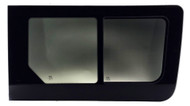
Where To Put Windows In A Camper Van
Published by VWD on Feb 16th 2026
Where To Put Windows In A Camper Van (Airflow & Condensation Explained)
Most people choose van windows based on appearance.
But windows control something far more important than looks: temperature, airflow, moisture, and sleep quality.
Poor window placement makes a van feel hot, damp, and stuffy even with expensive fans installed. Good placement makes the same van comfortable in the same weather.
The difference comes down to how air actually moves around a vehicle.
This guide explains the physics so you can design a layout that works instead of guessing.
Air Does Not Move Randomly Around A Van
When a van drives forward, air does not hit every panel equally.
The vehicle creates pressure zones:
- Front half of van = high pressure air
- Middle of van = neutral pressure
- Rear of van = low pressure turbulent wake
Air always moves from high pressure to low pressure.
That single rule determines whether a window pulls air inside or struggles to do anything.
A roof fan alone cannot fix poor airflow if the intake window sits in the wrong location.
Intake vs Exhaust — The Most Important Concept
Every van needs two things:
- a place for air to enter
- a place for air to leave
If both openings are in low pressure zones, air barely moves. If one is intake and one is exhaust, air moves across the entire cabin.
That moving air is what cools people and removes humidity.
Not the fan itself. Not the size of the window. The path the air travels.
Why The Sliding Door Window Is The Most Important Window
The sliding door sits near the center of the van where people live.
This area receives cleaner airflow than the rear doors and is lower than the roof fan.
That makes it an ideal intake location.
When the roof fan exhausts air, it needs replacement air. If the intake is close to the fan, it short-circuits. If the intake is near the living area, it cools the occupants.
A center intake plus a roof exhaust creates cross-flow ventilation.
This is why a properly placed Sprinter sliding door window usually has the largest impact on comfort inside the van.
Why A Forward Side Window Helps Airflow
Air pressure is stronger toward the front half of the van. Adding a secondary intake here feeds fresh air deeper into the cabin.
This is where a driver side forward window helps supply airflow across seating and kitchen areas instead of relying on rear turbulence.
Why Rear Windows Often Underperform
Many vans install windows near the rear doors expecting ventilation.
The rear of a van sits inside a turbulent low-pressure wake created as air detaches behind the vehicle.
Air here swirls instead of flowing cleanly.
- rear openings struggle to pull air inside
- fans work harder but move less air
- heat stays trapped near the bed
Rear windows work better as exhaust or cross-flow balance points such as a driver side rear quarter window or passenger side rear quarter window.
The Best Airflow Layout
The most effective ventilation layout follows a simple pattern:
center intake → airflow path → rear or roof exhaust
Air enters near occupants, travels across the van, and exits at the highest or furthest point.
This removes heat and humidity instead of circulating it.
Why Condensation Happens In Vans
Condensation is not caused by cold weather.
It is caused by moisture that cannot escape.
Every night humans release moisture while breathing. Cooking releases far more.
When humid air hits cold metal walls it becomes water.
If airflow replaces interior air continuously, moisture never builds up enough to condense.
Most “insulation problems” are actually airflow problems.
Sleeping Comfort Depends On Air Exchange
People do not wake up uncomfortable because the van is hot. They wake up uncomfortable because air stopped moving.
Moving air removes:
- heat
- humidity
- CO₂ buildup
That is why a small correctly placed window can outperform a large incorrectly placed one.
Common Window Placement Mistakes
- Placing intake and exhaust next to each other
- Relying only on a roof fan
- Putting main windows only at the rear
- Choosing window size over airflow path
- Blocking airflow with cabinets
The van feels stuffy even though expensive components were installed.
Designing A Comfortable Layout
A comfortable van follows airflow, not symmetry.
Best general layout:
- sliding door intake
- forward side assist intake
- rear or roof exhaust
The air should travel across where people sit and sleep.
If air travels along the ceiling only, occupants still feel warm.
The Goal Is Air Replacement, Not Just Air Movement
Circulating air inside the van does little. Replacing interior air changes comfort immediately.
Good placement creates air exchange. Bad placement creates air stirring.
One cools people. The other does not.
Final Thoughts
Window placement determines whether ventilation works.
Fans help airflow. Placement creates airflow.
If intake and exhaust locations follow pressure zones, even moderate weather feels comfortable inside the van.
If they fight the pressure zones, no equipment solves the problem.
Design airflow first. Choose window sizes second.