
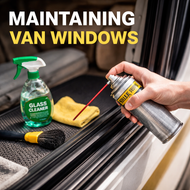
Van Window Maintenance Guide
Published by VWD on Feb 27th 2026
Van Window Maintenance Guide
Van windows are not just a view. They are a system. Glass, seals, latches, tracks, weep channels, and hardware all work together to keep your build dry, quiet, and easy to use. This guide shows exactly how to clean, lubricate, inspect, and protect your van windows so they keep operating like new.
Why maintenance matters
Neglected van windows can develop sticking sliders, worn latches, clogged drainage, hardened seals, and water intrusion. A simple routine prevents most issues and protects the value of your van conversion.
The safe way to clean van window glass
Use non-abrasive methods. Avoid harsh cleaners and aggressive scrubbing. For solar privacy glass, treat the surface like automotive glass and keep it simple.
- Use a quality automotive glass cleaner or a dedicated glass polish.
- Use a clean microfiber towel. Flip to a dry side for the final wipe.
- Avoid abrasive pads, scouring sponges, and metal scrapers.
- Avoid strong ammonia or unknown high-alkaline cleaners.
Need the right supplies? Start here: Glass Cleaners and Polishes.
Sliding window maintenance
Sliding van windows fail early for one reason. Dirty tracks. Dust and grit increase friction. Friction stresses the latch and hardware.
Step 1: Clean the tracks
- Open the slider fully.
- Vacuum the lower track to remove loose debris.
- Use compressed air to push grit out of corners.
- Use a soft nylon brush for stuck dirt.
- Wipe the track dry. Do not flood the track with water.
Step 2: Lubricate the rubber channel
Use a silicone-based lubricant that is rubber-safe. Do not use petroleum grease. Do not use general-purpose oils that can swell or dry out seals.
- Spray silicone onto a microfiber cloth, not directly into the track.
- Wipe the rubber channel lightly.
- Cycle the window open and closed to distribute.
Drainage and weep holes
Many van windows include drainage paths to manage incidental moisture. If these clog, water can back up and migrate where you do not want it.
- Inspect the lower exterior frame area where water exits.
- Clear debris with a soft tool like a plastic pick or compressed air.
- Do not enlarge holes with metal tools.
Rubber seal conditioning
Seals are consumable components. Heat and UV accelerate hardening and shrinkage. Dry climates and desert conditions are especially hard on rubber.
- Use a rubber-safe protectant or conditioner on seals every 3 to 6 months.
- Apply a light coat, let it absorb, then wipe excess.
- Do not use petroleum-based dressings.
Extra protection matters. Insulated covers reduce sun exposure and help stabilize interior temps: Van Window Covers.
Awning and crank-out windows
Awning windows should be operated routinely. Hardware that never moves is more likely to bind or feel rough later.
- Open and close awning windows at least monthly.
- Inspect latch function and alignment.
- If motion feels uneven, inspect mounting points and hardware.
If you ever need service parts, start here: Replacement Parts.
Urethane-bonded window inspection
If your window is urethane installed, the bond line is the seal. Inspect it during your normal cleaning routine.
- Check for lifting edges, gaps, or visible separation.
- Inspect interior trim areas for moisture or staining.
- Do not disturb cured urethane unless you see a real issue.
For install materials and related categories: Urethanes and Primer and Installation Accessories.
Dry climate and desert maintenance schedule
Dust is the enemy of smooth operation. If you drive or park in dry climates, treat track cleaning as routine, not optional.
- Glass cleaning: monthly or as needed.
- Track cleaning: every 30 to 60 days in dusty conditions.
- Silicone wipe on rubber channels: every 60 to 120 days.
- Rubber seal protectant: every 3 to 6 months.
- Awning window operation: monthly.
- Drainage check: twice per year minimum.
Common mistakes that shorten window life
- Pressure washing directly into seals.
- Using petroleum grease or unknown oils on rubber.
- Letting tracks fill with grit until the slider drags.
- Ignoring drainage paths until water shows up inside.
- Leaving awning windows unused for long periods.
FAQ
What should I use to lubricate van window seals and tracks?
Use a rubber-safe silicone-based lubricant applied lightly. Avoid petroleum greases and oils that can attract dirt or damage seals.
How do I stop a sliding window from sticking?
Clean the track thoroughly, remove grit from corners, then apply a light silicone wipe on the rubber channel. If the latch still feels rough, inspect for debris near the latch engagement area.
How often should I check drainage?
At least twice per year. More often if you park under trees, drive dusty roads, or see heavy condensation.
Why open awning windows routinely?
Regular cycling keeps hardware moving smoothly and helps you catch small issues before they become failures.
Need install help or specs? Visit: Window Installation Instructions.